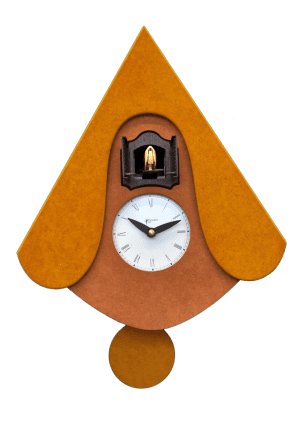
Despite their reputation for precision watchmaking, the Swiss cannot lay claim to the cuckoo clock. That title belongs to the Black Forest, a mountainous area tucked away at the edge of southwest Germany.
While the chalet style of cuckoo clocks is associated with Switzerland, most traditional cuckoo clocks are made in Germany. This post explores the difference between Swiss and German cuckoo clocks.
Are cuckoo clocks Swiss or German?
Clockmakers in the Black Forest have been crafting cuckoo clocks for centuries, using the same locally sourced materials and techniques. Most are registered with the Black Forest Cuckoo Clock Association, which gives its seal of approval to clocks that meet its standards.
In Switzerland, cuckoo clocks are sold as souvenirs to tourists hoping to take a piece of their trip home with them, but most of these clocks are cheap imports made to resemble the real thing.
Switzerland has a handful of traditional cuckoo clock makers, but in smaller numbers than in Germany (we’ll come back to this later).
Features of a chalet-style cuckoo clock
Chalet cuckoo clocks are designed in the style of Swiss or German chalets and farmhouses. It’s easy to see why people associate the cuckoo clock with Switzerland and why they’re so popular as souvenirs.
Chalet cuckoo clocks are made from decoratively carved wood with moving figurines that fit the clock’s theme. Woodchoppers, bell ringers, and beer drinkers are often found on chalet cuckoo clocks, with music accompanying their movements on the hour (and half hour for eight-day clocks).
Swiss-style cuckoo clocks are typically designed to look like the chalets found in Brienz and other areas of the Oberland region in central Switzerland.
Traditional German cuckoo clock features
There are three traditional cuckoo clocks made in the Black Forest — nature, hunter, and station-house. Each one is carved intricately from wood and finished with decorative elements that reflect its theme.
The ‘station house’ is a classic cuckoo clock based on a German railroad guard house, with ornate leaf carvings around the edge.
‘Hunter’ and ‘nature’ pay homage to German flora and fauna with carved animals like birds, deer, and rabbits. Both have leaf carvings, but you’ll also find painted flowers and berries on the clock designed to reflect nature.
Do the Swiss make cuckoo clocks?
The number of cuckoo clock makers in Switzerland is relatively small compared to the Black Forest region of Germany.
However, there are a few notable Swiss cuckoo clockmakers. The village of Brienz in the Bernese Oberland is mainly known for its woodcarving tradition, which includes the creation of cuckoo clocks.
Lötscher near Zurich claims to be the only genuine Swiss cuckoo clock maker. Established in the early 19th century, Lötscher is one of the few companies in Switzerland dedicated to the traditional art of cuckoo clock-making.
Swiss cuckoo clock vs German cuckoo clock price
The long-standing tradition and expertise of the Black Forest region contribute to the high quality and often higher prices of cuckoo clocks from this area.
Swiss cuckoo clocks, known for precision and quality, are much rarer than their German counterparts, which can drive up prices.
Whether your clock was made in Switzerland or Germany, its exact price will be determined by materials, brand reputation, and complexity.
The bottom line
Traditionally made Swiss cuckoo clocks are rare. Only a handful of cuckoo clock makers remain in the country, but it’s easy to see why people have come to associate the cuckoo clock with this area. Chalet-style clocks made by German clockmakers closely resemble the chalets found in Switzerland.
The bottom line: While the Swiss cuckoo clock is harder to find, authentic Black Forest cuckoo clocks are coveted for their heritage.